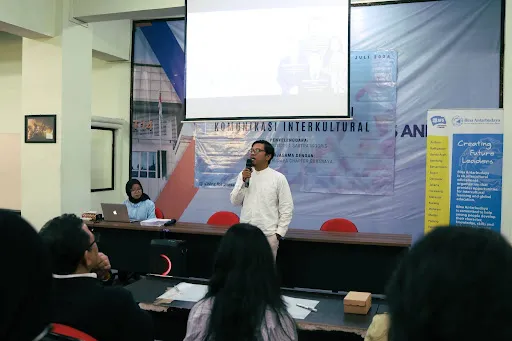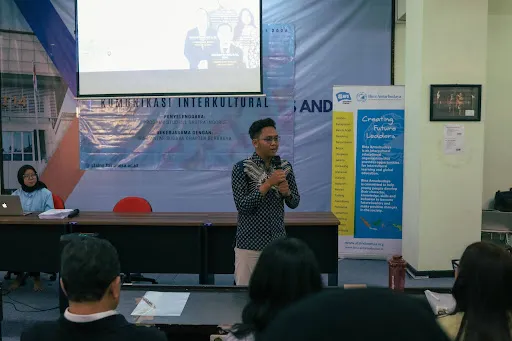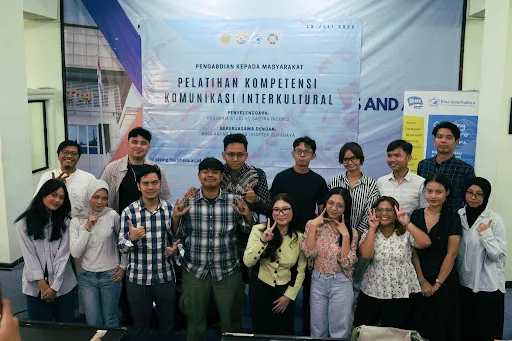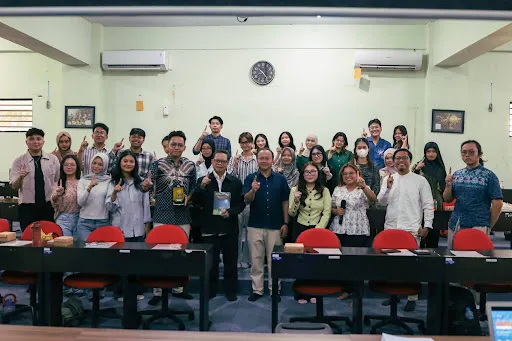
This Community Service Program (Pengabdian kepada Masyarakat/PkM) will be conducted in collaboration with Yayasan Bina Antarbudaya, a volunteer based, non profit organization dedicated to international student exchange. Bina Antarbudaya is the official Indonesian partner of AFS Intercultural Programs, one of the world’s largest intercultural exchange organizations, operating in more than 60 countries across five continents (AFS, 2020). AFS is headquartered in New York, United States. In Indonesia, Bina Antarbudaya has 20 chapters from Sabang to Merauke, including the Surabaya Chapter. Administratively, Bina Antarbudaya Chapter Surabaya is located in Surabaya, East Java, and operates as part of the national Bina Antarbudaya network, which has long served as the official partner for various international student exchange programs.
As a non-profit organization, Chapter Surabaya is not driven by financial gain but by its commitment to social service and education, particularly in preparing Indonesian students to interact and adapt in multicultural environments. The organization regularly conducts activities such as selecting prospective exchange students, organizing pre-departure orientations, providing support throughout the exchange program, and facilitating reintegration activities when students return to Indonesia.
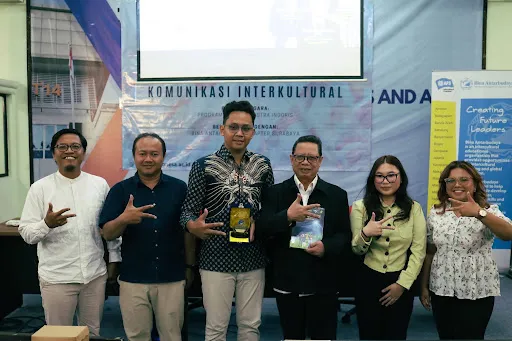
Like many international organizations operating across cultures, Bina Antarbudaya faces challenges in managing members from diverse cultural backgrounds (Ganapathi, 2019). This challenge is also evident within Bina Antarbudaya Surabaya, where organizational staff, volunteers, and exchange students interact as members of the same community. Several communication issues have been identified during organizational activities, particularly within the Hosting Division, which is responsible for receiving and supporting incoming international students. Common issues include misunderstandings arising from differences in language use, communication styles (direct and indirect), varying perceptions of politeness, and the limited preparedness of contact person (volunteers assigned to assist international students) in handling culturally sensitive differences in values and behaviors. These challenges indicate a gap in intercultural communication competence that requires a systematic and structured intervention.
From a socio-cultural perspective, Bina Antarbudaya Chapter Surabaya operates within a multicultural urban environment, where volunteers, hosting coordinators, and contact person come from diverse cultural, linguistic, and international backgrounds. While this diversity represents a valuable organizational asset, it can also become a challenge if not supported by adequate intercultural competence. The quality of the organization’s services depends largely on the effectiveness of interactions between volunteers, hosting coordinators, buddies, and international students. Intercultural communication competence is therefore essential to ensuring that the values of tolerance, mutual respect, and cross-cultural understanding are effectively conveyed (Fantini, 2020; 2021). However, efforts to strengthen human resource capacity in intercultural communication have so far been sporadic and have not yet been implemented through a structured, competency based training program.